Denim Weights Explained: 8oz to 14oz
Denim weight drives everything from drape to durability. Here's how ounces map to real garments — and how to spec the right one.
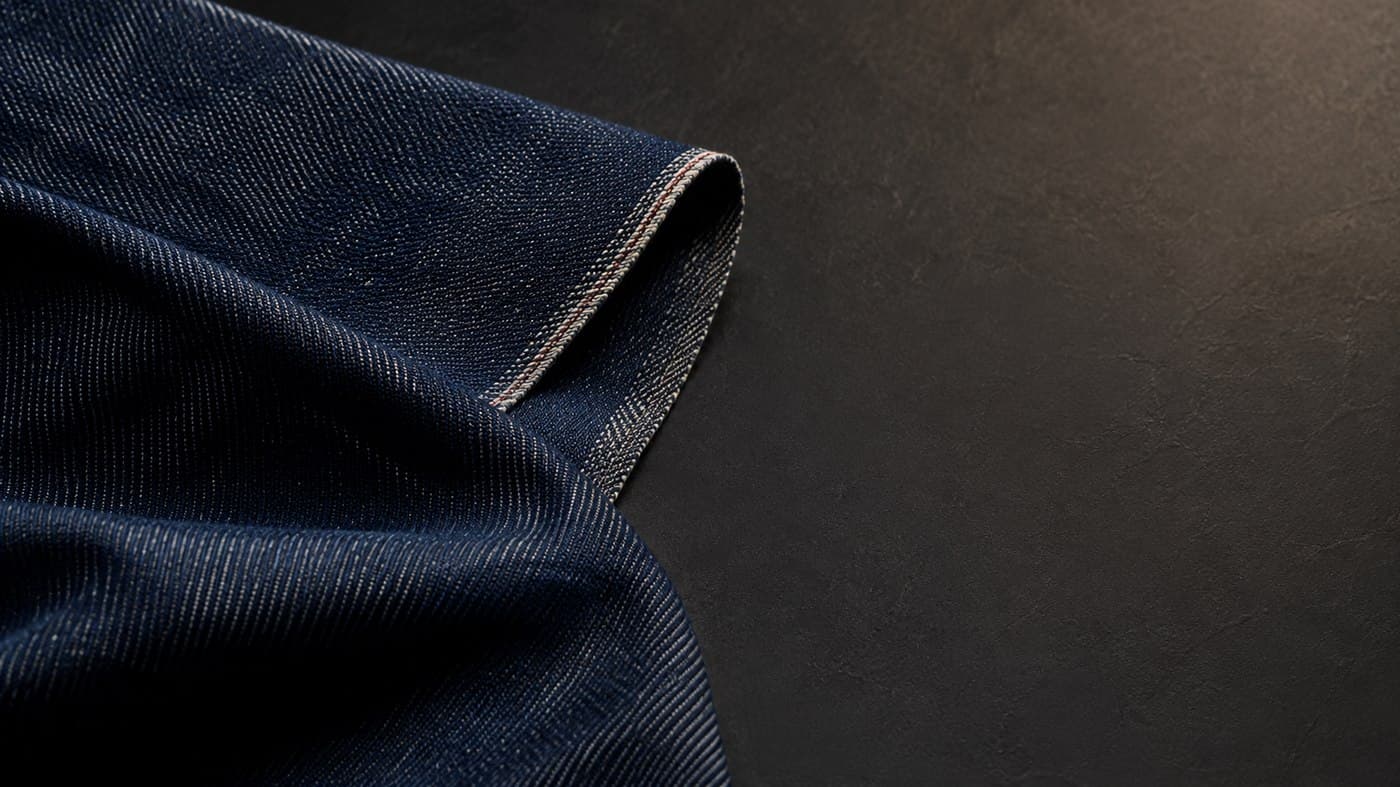
Denim is sold by weight in ounces per square yard — and that single number tells you a lot about how a jean will wear, how it will sew, and what it will cost to ship.
What the number actually means
The ounce figure is a legacy of the American workwear trade: it describes how much one square yard of the fabric weighs. Most of the rest of the sourcing world works in GSM (grams per square metre), so it pays to be fluent in both. The conversion is simple — one ounce per square yard is roughly 33.9 GSM — and having both numbers on your spec sheet avoids confusion when a tech pack written in ounces meets a partner unit that quotes in grams.
One caveat worth knowing: weight is usually quoted for the loom-state or sanforised fabric before garment washing. A heavy stone wash or enzyme wash can strip several per cent of the weight out, so a 12 oz fabric may land closer to 11.5 oz in the finished jean. If the finished-garment weight matters to you, say so in the brief.
Weight guide
| Weight | Approx. GSM | Feel | Typical use |
|---|---|---|---|
| 8–9 oz | 270–305 | Light, soft | Shirts, dresses, summer jeans |
| 10–11 oz | 340–375 | Mid, versatile | Everyday jeans, jackets |
| 12–14 oz | 405–475 | Heavy, structured | Workwear, rigid raw denim |
| 14 oz+ | 475+ | Very heavy | Heritage / selvedge, workwear |
How weight plays out in the garment
8–9 oz drapes and breathes. It suits denim shirts, dresses and hot-climate jeans, and it breaks in almost immediately — but it won't hold a sharp crease or take heavy abrasion.
10–11 oz is the workhorse of everyday five-pocket programmes. It balances comfort against durability, takes most washes well, and sews without special handling — which is why so many high-street ranges live here.
12–14 oz brings real structure. Expect a stiff first wear, a longer break-in, and the pronounced fading that raw-denim customers pay for. On the production side, heavier weights need stronger needles, slower sewing speeds and more attention at multi-ply points like belt loops and back-pocket corners — worth flagging to your garment maker early.
14 oz and up is heritage and workwear territory: selvedge reproductions, chore coats, double-knee work trousers. Freight cost per garment rises noticeably here too, so factor weight into your landed-cost maths.
Beyond weight
- Stretch — adding elastane changes hand-feel, recovery and sizing. Specify the percentage (2% reads rigid-with-give; 3%+ is comfort stretch) and ask for growth/recovery figures.
- Wash & finish — rigid (raw) vs pre-washed dramatically changes look, hand and cost. Rinse, stone, enzyme and bleach washes each shift the shade and the weight.
- Warp/weft — indigo warp with white weft gives the classic denim fade; a dyed weft or black-black construction changes the character entirely.
- Shrinkage — confirm the fabric is sanforised (pre-shrunk) unless you specifically want shrink-to-fit behaviour.
Specifying denim
Tell us the weight (with a tolerance — ±0.5 oz is standard), whether you need stretch, and the wash/finish you're after. Denim and bottomweights are typically developed to your exact spec rather than pulled off a shelf, so a clear brief gets you a closer first sample and fewer rounds of revision.
Explore denim & bottomweights or request free swatches to compare weights in hand — the difference between 10 oz and 12 oz is far easier to feel than to read.
Once you've settled on a weight, denim fabric from 6oz to 14oz covers how we coordinate it as an order.
Bereit, diesen Stoff zu beschaffen?
Kostenlose Stoffmuster, ehrliche Lieferzeiten, ein verantwortlicher Partner.
Kostenlose Stoffmuster anfordern