What Is a CFA in Fabric Printing? Strike-Off vs CFA vs Bulk Header
Cutting for approval fabric explained: how a CFA differs from a strike-off and a bulk header, what each print approval proves, and the risk of skipping one.
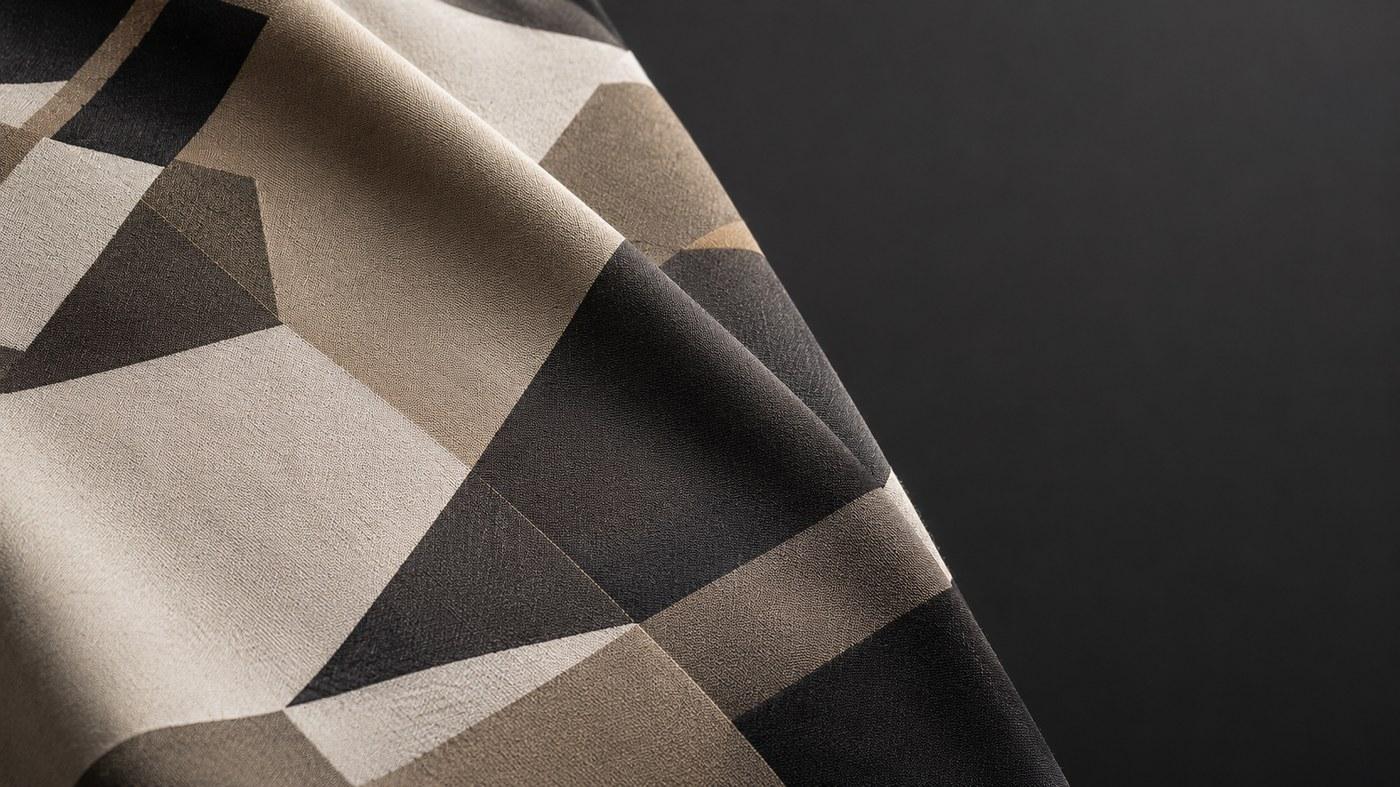
Cutting for approval fabric, or a CFA, is a length cut from the bulk production run and sent to the buyer for sign-off before the lot ships. It checks that the finished bulk matches the approved strike-off. It sits between two other gates: the strike-off before production and the bulk header kept after it. Run all three, in that order.
What is a CFA (cutting for approval) in fabric printing?
A CFA is a cutting taken from fabric that has gone through the whole bulk route: printed on the production machine, fixed or cured, washed off where the print route requires it, softened and stentered. Everything between the sample table and the finished roll can move a print, and the CFA is the first cloth that has seen all of it.
It is commonly a full-width cutting showing at least one complete repeat, so registration and repeat size can be checked across the width. One cutting represents one point in production, so on larger lots ask for cuttings from the start and end of the run.
Check it against the signed strike-off for shade, registration, repeat size and hand. Measure the repeat: on a 64 cm repeat, 4% length shrinkage in finishing removes about 2.6 cm (64 × 0.04), enough to upset a placement or seam match planned on the nominal repeat.
The CFA is also the right sample for bulk testing, since a strike-off may not have been fixed and washed like bulk. Typical checks are colour fastness to washing under ISO 105-C06 and to rubbing under ISO 105-X12, dry and wet, with change in colour rated on the ISO 105-A02 grey scale and staining on the ISO 105-A03 grey scale. Pigment prints with heavy coverage are a common wet-rub risk.
How is a CFA different from a strike-off?
A strike-off is a sample print of your design on the agreed base, made before bulk to approve colour, registration and scale. It approves the intent. The CFA approves the execution: it asks whether bulk landed where sampling said it would. The guide to strike-offs and print approvals covers how to brief and judge one.
A strike-off is often printed on a sampling machine or digital sampler and may skip parts of bulk finishing. A digital sample for a rotary bulk run is a guide to colour, not a promise of it; rotary, digital and screen printing compared shows where the methods diverge. It cannot catch production-machine drift, a finishing shift, width loss or variation between lots.
| Strike-off | CFA | Bulk header | |
|---|---|---|---|
| When | Before bulk, once artwork and base are fixed | After bulk is printed and finished, before shipment | At packing, one per lot, kept after approval |
| Taken from | A sample print on the agreed base | The finished production run | The approved lot that ships |
| Proves | Colour, registration, scale and hand on that base | Bulk matches the strike-off after full finishing | What this lot looked like when it left |
| Cannot catch | Bulk machine, finishing and lot variation | Rolls it was not cut from; defects in roll bodies | Nothing new: it is a record |
| Signed by | Designer plus colour or QA lead | Buyer's QA lead or technologist | Supplier QC labels it; buyer checks lot number |
| Judged against | Artwork and physical colour standards | The signed strike-off | Later shade claims and reorders |
What does a bulk header prove that a CFA does not?
A bulk header is a labelled cutting retained from each lot that ships, kept by buyer and supplier as the reference for that lot. The CFA asks whether bulk is right; the header records what the lot looked like when it left. Its value arrives months later.
The vocabulary is not standardised: some suppliers use "header" for the CFA itself, and in greige inspection it means a full-width cutting from every roll, matched across the lot. The labels matter less than the two jobs, an approval before shipment and a retained record per lot after it. If your supplier uses one word, write both jobs into the order.
The header earns its place in three situations:
- Shade claims. When garments from two deliveries look different on a rail, each lot's header shows whether the cloth differed or the variation came later, from mixed lots in one lay, washing or storage.
- Reorders. Match a reorder to the header of the lot already in store, not the original strike-off. Customers compare new stock with old stock.
- Multi-lot orders. A header per lot lets the cutting room keep lots apart within one style.
Store headers sealed, labelled and out of the light; a faded header is useless as evidence.
Who should sign each print approval, and against what standard?
Each gate needs one named approver with authority to say no, and a written standard. An email reply to a photo is not an approval: a monitor cannot show true shade or metamerism.
- Strike-off. The designer or product developer signs for artwork, scale and placement. The colour or QA lead signs for shade against physical standards, such as Pantone TCX references. Judge it in a light booth under D65 and a second source matching retail lighting. Sign and date it; the printing unit keeps the counterpart.
- CFA. The buyer's QA lead or fabric technologist signs, against the signed strike-off, not the artwork. Agree the tolerance before bulk starts: a visual grade or instrumental colour-difference limit, plus required fastness ratings.
- Bulk header. The supplier's QC labels and seals it with order, design, colourway and lot number; the buyer checks it against roll tickets and the packing list.
What to put on the PO:
- Strike-off printed by the bulk method on the bulk base, signed and dated; counterpart retained by the printing unit.
- CFA: full-width cutting from finished bulk showing one full repeat, judged against the signed strike-off under D65 plus [retail light source]; no shipment before written approval.
- Bulk fastness: ISO 105-C06 [test code] and ISO 105-X12 dry and wet, minimum ratings stated.
- One bulk header per lot, labelled with lot number, retained by both parties.
- Lot number on every roll ticket and on the packing list.
What goes wrong when one print approval is skipped?
No strike-off. Bulk becomes the sample. A wrong scale or a muddy separation is found on finished cloth, and the fix is a reprint. With rotary minimums commonly in the thousands of metres, the exposure is large.
No CFA. A finishing shift, a repeat that shrank or a failed wet rub is found on receipt or, worse, after cutting. Claims on cut fabric are commonly limited or refused, so the loss moves to the buyer.
No bulk header. A shade claim becomes your word against the supplier's, and a reorder gets matched to an old strike-off. Small drifts then compound across seasons.
The trade-off is sampling effort against exposure. On a short digital run the CFA can be lighter, such as one cutting from the first finished metres, but it still comes before shipment, and the lot still needs a header.
Burhan Enterprises is a sourcing partner in Karachi, not a mill: we print at our own print unit or match a print requirement to suitable partner units, and hold the specification and approvals through production. Digital printing starts from 100 m per colour per design for low-MOQ digital printed fabric, and rotary printing from 3,000 m per colour per design for custom printed cotton.
Quick answers
What is a CFA in fabric printing? A CFA, or cutting for approval, is a cutting from the finished bulk run, sent to the buyer before the lot ships. The buyer checks it against the signed strike-off for shade, registration, repeat size and hand, and often tests it for fastness. Shipment should wait for written CFA approval, the last point to stop a wrong lot before it leaves the supplier.
Is a bulk header the same as a CFA? Some suppliers use the terms interchangeably, but the jobs differ. A CFA is approved before shipment to confirm that bulk matches the strike-off. A bulk header is a labelled cutting retained from each shipped lot as the reference for shade claims and reorders. If your supplier uses one word for both, write both jobs into the purchase order.
Can a digital strike-off approve a rotary bulk run? Only as a guide. A digital sample shows the artwork and scale, but not how rotary screens, print paste and finishing will render colour on the bulk base. For rotary bulk, ask for a rotary strike-off on the bulk base, or agree in writing that the CFA, not the digital sample, is the binding colour standard.
Who should approve a CFA? A CFA should be approved by someone with technical authority on the buyer's side, usually the QA lead or fabric technologist, not the designer alone. They judge it against the signed strike-off under D65 and a second source matching retail lighting, using a tolerance agreed before bulk. Photographs are not enough: a monitor cannot show true shade.
Do small digital print runs need a CFA? Yes, although the gate can be lighter. On a run of a few hundred metres, the CFA may be one cutting from the first finished metres rather than cuttings from the start and end of the run, but it still needs written sign-off before shipment, and the lot still needs a bulk header.
Bereit, diesen Stoff zu beschaffen?
Kostenlose Stoffmuster, ehrliche Lieferzeiten, ein verantwortlicher Partner.
Kostenlose Stoffmuster anfordern