Low-MOQ Digital Fabric Printing: How 100 m Per Colour Per Design Works
Digital printing needs no engraved screens, so minimums fall to around 100 m per colour per design. How low-MOQ print programmes work, and where rotary still wins.
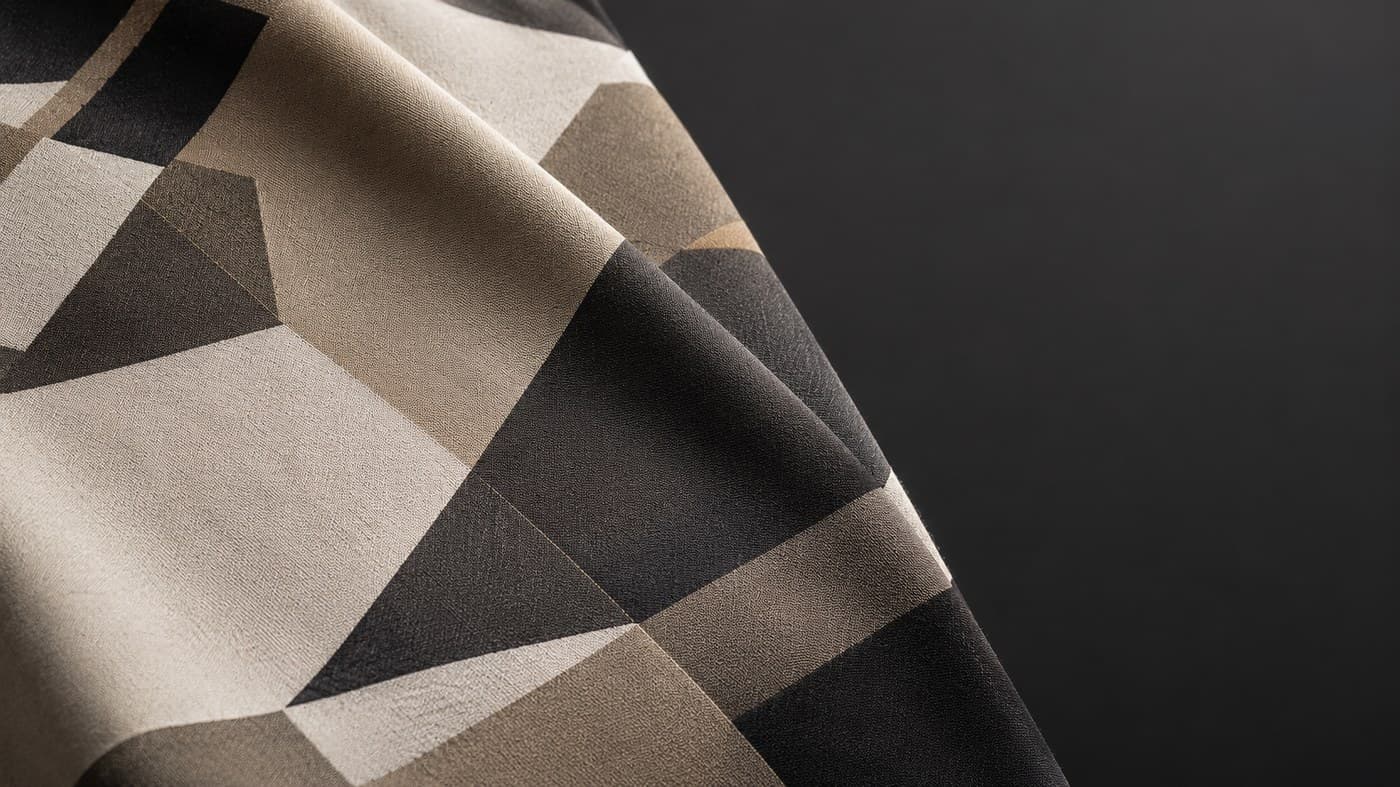
Digital fabric printing applies artwork to cloth directly from a file, through inkjet print heads — no engraved screens, no cylinders, no physical plates. Because the design exists only as data, there is almost nothing to manufacture before printing can start, and that is what makes genuinely low minimums possible: runs of around 100 metres per colour per design are practical on digital machines, where rotary screen printing typically needs thousands of metres to justify its setup.
Why the minimum can be so low
Rotary screen printing carries a physical setup cost that digital does not. Every colour in a rotary design needs its own engraved cylinder — a six-colour print means six engravings — and each engraving is specific to that one design. Add the time to mount, register and wash down the machine between designs, and you have a fixed cost that is the same whether you then print 500 metres or 50,000. Printers recover it the only way they can: by insisting on long runs. That is why rotary minimums across the industry run to thousands of metres — and why our rotary minimum is 3,000 m per colour per design.
Digital replaces all of that with file preparation and machine calibration. Changing designs means loading a new file, not commissioning new hardware. The minimum is set by the practicalities of pre-treating and handling a short length of base cloth, not by engraving economics — which is how our digital and sublimation programmes run at 100 m per colour per design.
What a 100-metre programme lets a small brand do
A hundred metres is roughly enough fabric for a small production drop, which changes what an early-stage brand can attempt:
- Launch a capsule of several prints without committing thousands of metres to each
- Test competing designs in the market, then reorder only the winners
- Produce sellable stock from the same run used for sampling and photography
- Trial new colourways of a proven design without new hardware
Because digital builds colour from process ink dots, a design with twelve colours needs no more setup than a design with two — extra colours add no engraving. This is the model behind our low-MOQ sourcing programmes.
Digital vs rotary at a glance
| Digital | Rotary screen | |
|---|---|---|
| Minimum in our programmes | 100 m per colour per design | 3,000 m per colour per design |
| Per-design setup | File preparation and calibration | One engraved cylinder per colour |
| Adding colours | No extra setup — process inks | Each colour adds an engraving |
| Changing designs | Load a new file | New engraving every time |
| Best-fit order profile | Sampling, launches, tests, capsules, multi-design short runs | Established repeat styles at volume |
For the fuller picture, including flat-bed screen printing, see printed fabric 101.
What to check before you commit
- Base cloth and ink system — reactive inks suit cotton, sublimation suits polyester; confirm the base is pre-treated for the process
- Artwork files — resolution, repeat size and colour references agreed before anything prints
- Colour approval — a strike-off on the actual base cloth, approved before bulk
- Fastness requirements — wash, rub and light targets in writing
- Lead time — allow 20–40 days after sample approval in our programmes
- Tolerances — agreed in writing on the order confirmation, with inspection against an approved retained sample
The honest trade-offs
The economics reverse at volume. Rotary amortises its setup across long runs, so once a design sells in the thousands of metres, rotary is usually the more efficient way to print it — digital's advantage lives at the short end. A sensible programme treats digital as the proving ground and moves winning designs to rotary as reorders grow, so prepare artwork with that transfer in mind. A few effects also remain screen territory — discharge prints and certain speciality inks — and short-run colour consistency depends on disciplined strike-off and retained-sample practice rather than on the machine alone.
As a sourcing partner rather than a mill, we run low-MOQ digital programmes through partner printing units and match your artwork to the right base from our woven fabric library. Browse printed qualities in our Fabric Library, request free swatches or start a development.
For how this runs as an actual order, see digital printed fabric from 100m per colour.
Klaar om dit te sourcen?
Gratis stalen, eerlijke levertijden, één aanspreekbare partner.
Vraag gratis stalen aan