Piece-Dyed vs Yarn-Dyed Fabric: What the Difference Means for Your Order
Piece-dyed fabric is coloured after weaving; yarn-dyed fabric is woven from pre-dyed yarns. Here's how that one difference shapes looks, MOQs and lead times.
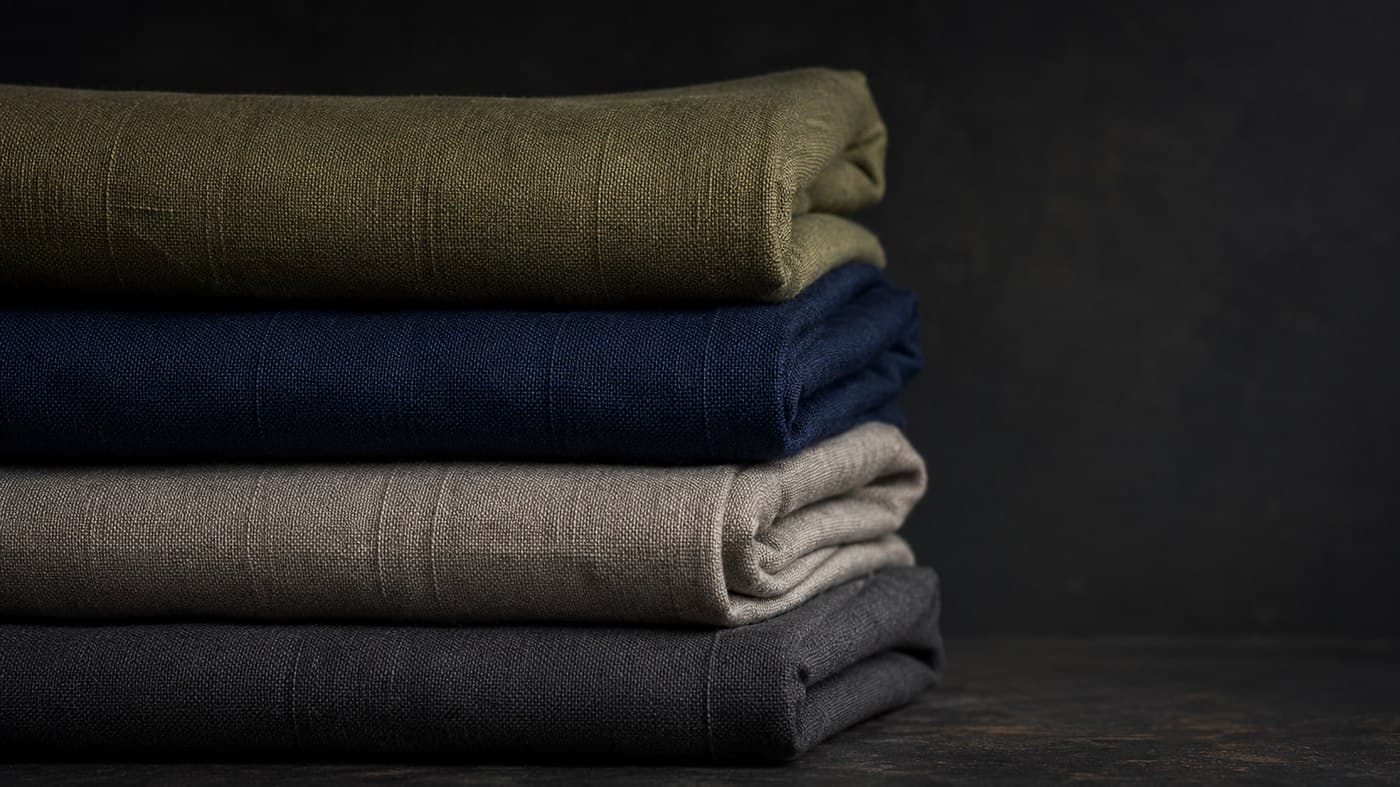
The difference between piece-dyed and yarn-dyed fabric is simply when colour enters the process. Piece-dyed fabric is woven first, in its undyed greige state, and dyed afterwards as whole cloth; yarn-dyed fabric is woven from yarns that were dyed before they ever reached the loom. Everything else that separates the two — the looks they can produce, how flexible they are, how long they take and how much you must order — follows from that one decision.
Piece-dyed: colour after weaving
A piece-dyed quality starts life as greige — woven, undyed cloth — and is dyed in fabric form once the shade is decided. It is the standard route to solid colours, and its efficiency is hard to beat: one greige base can serve an entire palette, with each colour dyed only as it is needed.
That sequencing is also a planning tool. Because colour is the last major decision, a brand can hold stock in greige and commit each batch to a shade only when orders firm up — flexibility yarn-dyed cloth cannot offer. On our own programmes, dyeing typically runs 30–60 days after lab-dip approval, and the dye class — see vat vs reactive — is chosen against the end use.
Yarn-dyed: colour before weaving
In a yarn-dyed fabric the yarns are dyed first, in lots, and the pattern is then created on the loom by arranging coloured yarns in the warp and weft. Stripes, checks, ginghams, tartans and shirting patterns are the classic results. Chambray pairs a dyed warp with an undyed weft, and heather or mélange effects blend fibres or plies of different shades within the yarn itself.
Because the colour sits in the structure, the pattern shows on both faces of the cloth and cannot skew off-grain or fall out of register the way a printed stripe can. The price of that permanence is sequence: every colour must be chosen, matched and dyed at yarn stage before weaving can begin, which puts colour decisions at the front of the critical path and lengthens the pipeline.
The two routes side by side
| Aspect | Piece-dyed | Yarn-dyed |
|---|---|---|
| Where colour enters | After weaving, on greige cloth | Before weaving, at yarn stage |
| Typical looks | Solid shades | Stripes, checks, chambray, heather effects |
| Colour flexibility | High — shade decided late; greige can wait for orders | Low — colours fixed before the loom starts |
| Lead-time profile | Shorter — dyeing follows lab-dip approval (30–60 days on our programmes) | Longer — yarn lots are dyed, rewound and warped before weaving |
| MOQ dynamics | Per-colour tiers — on our programmes 1,500 m under 160 GSM, 3,000 m at or above | Generally set by yarn-lot sizes — each colour in the pattern must justify its own lot |
One further piece-dyed consideration is shade continuity. A programme that repeats will be dyed batch by batch, and no two dye baths behave identically, so continuity comes from discipline rather than luck: an approved standard retained from the first bulk, a fresh lab dip checked against it for every subsequent batch, and tolerances agreed in advance.
Choosing by product
As a rule of thumb, solid chinos, workwear twills, dyed poplins, linings and uniform cloth are piece-dyed; gingham dresses, checked flannel shirts, chambray shirting and striped canvas are yarn-dyed.
Before committing either way, check:
- Whether the design needs the pattern in the weave — visible on both faces and impossible to print off-grain or out of register — or whether a printed stripe would serve
- How many colours or colourways the range carries, and whether each one clears the relevant minimum on its own
- When you can realistically commit to colour — late suits piece-dyeing from a greige position; early commitment is the price of yarn-dyed
- For repeat programmes, how batch-to-batch shade continuity will be managed, and against which retained standard
The honest trade-off: yarn-dyeing buys you patterns piece-dyeing cannot make, and pays for them with early colour commitment, a longer pipeline and lot-driven minimums; piece-dyeing buys speed and late flexibility, and pays with a palette limited to solids.
As a sourcing partner working through partner weaving and dyeing units, we develop both routes and can tell you early which one your design actually requires. Browse dyed solids in our Fabric Library, request free swatches or start a development.
Piece dyeing only behaves predictably from a properly prepared base — see RFD (ready-for-dyeing) fabric.
Ready to source this?
Free swatches, honest lead times, one accountable partner.
Request free swatches