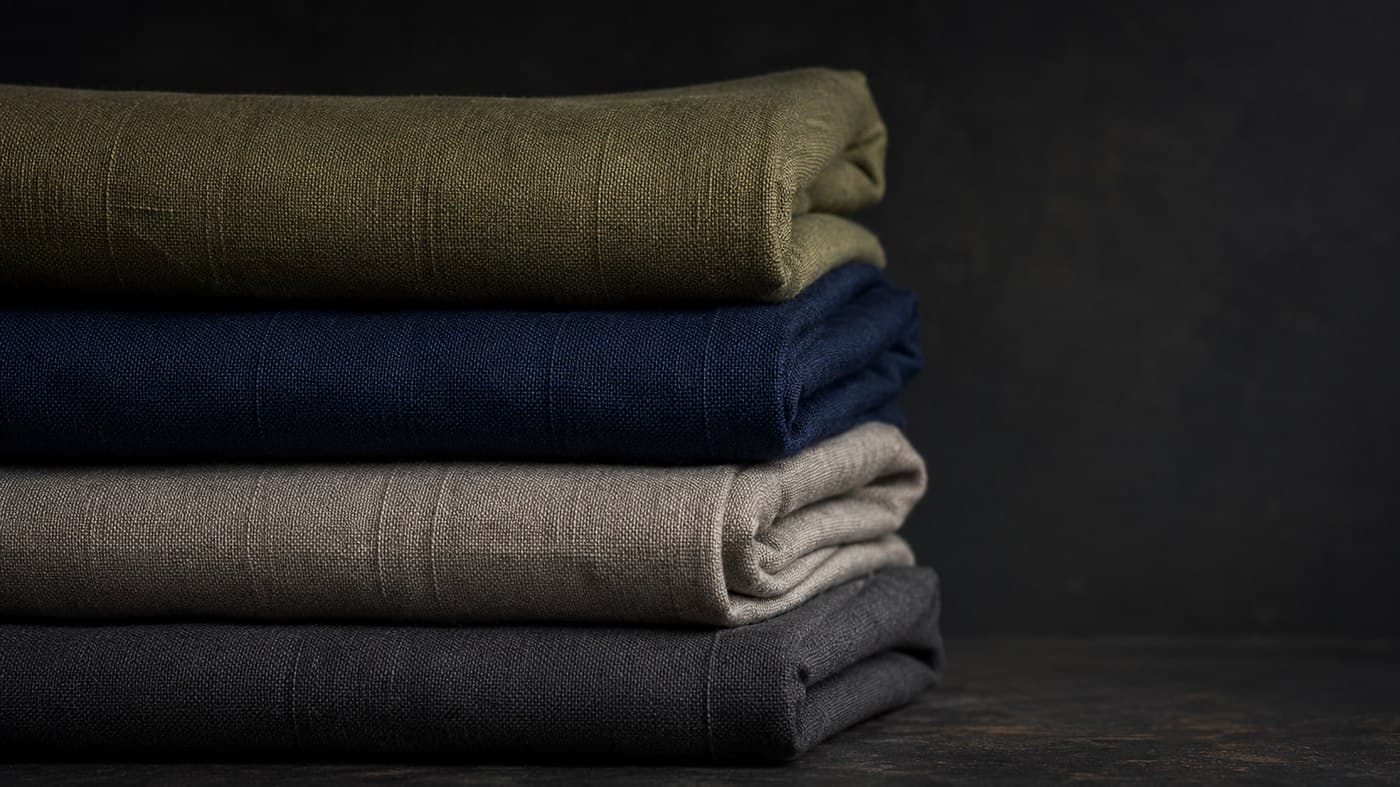
Greige Fabric Explained: What Loom-State Really Means
A greige swatch feels stiff and looks uneven, and none of that is a defect. What experienced buyers judge instead, and when loom-state beats finished cloth.
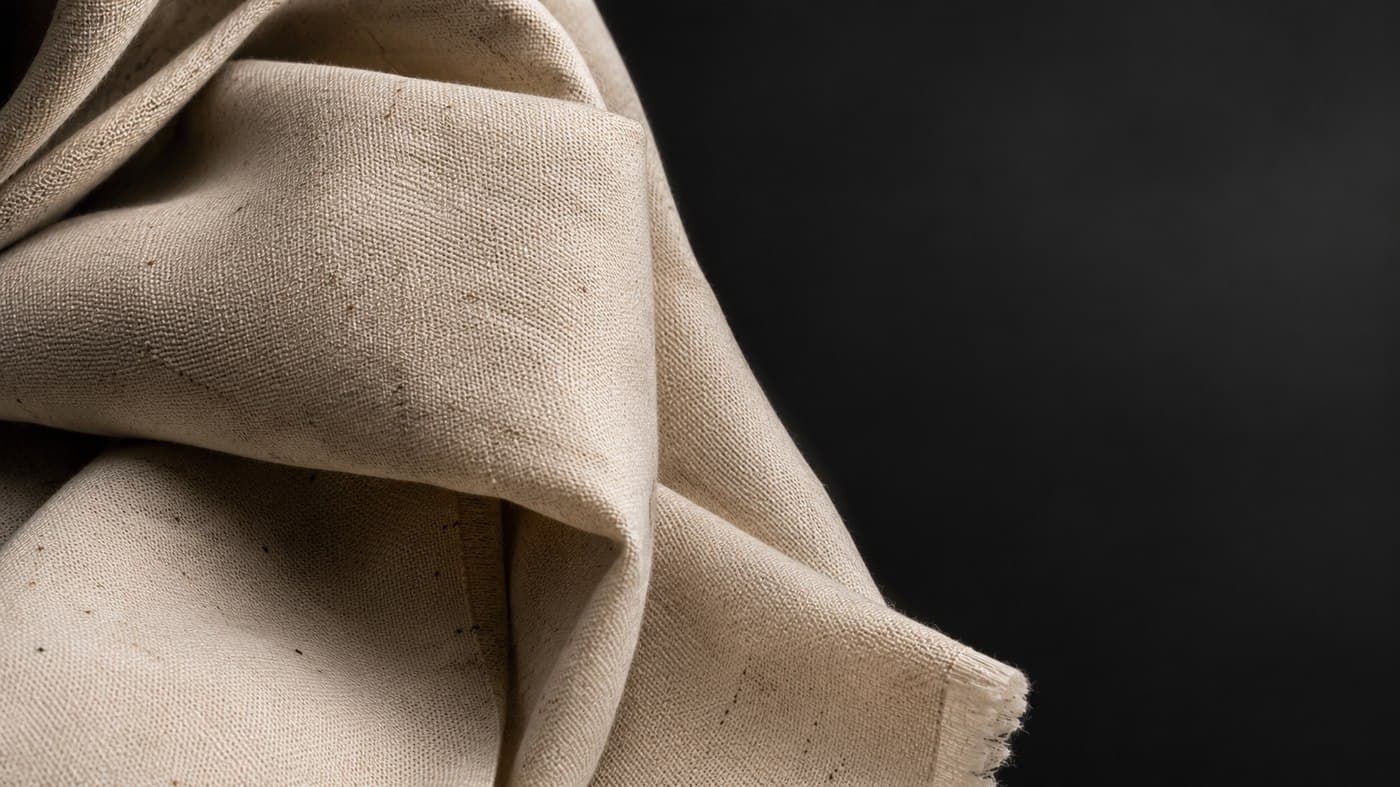
"Greige" (pronounced grey-zh) is fabric exactly as it comes off the loom — woven, but not yet dyed, printed or finished. It's sometimes called loom-state or grey fabric, and it's the raw material behind almost every finished textile. The name comes from the French grège, originally used for raw silk, and it has nothing to do with the colour grey — most cotton greige is actually a soft ecru or off-white.
What loom-state actually looks like
If you've only ever handled finished cloth, your first greige swatch can be a surprise. The warp yarns are still coated in size — a starch-based film applied before weaving to protect them on the loom — so the hand feels stiff, dry and slightly papery. The shade is uneven ecru rather than clean white, and you may spot seed fragments, motes, slubs or the odd oil mark.
None of these are defects in the usual sense. They're exactly what preparation — desizing, scouring and bleaching — exists to remove. Judging greige by its raw appearance is a common early-career mistake; judge it instead by its construction, regularity and weaving quality.
Why order greige?
Because it hands you control. When you buy greige, the dyeing, printing and finishing decisions are still open — so you can develop your own colours, prints and hand-feel rather than accepting a mill's stock finish.
Buyers typically choose greige when they want to:
- Develop bespoke colours or prints downstream
- Standardise on one base across multiple finished SKUs
- Control quality at each processing stage
- Hold flexible stock that can be committed to a shade only when orders firm up
That last point matters more than it looks. One greige base can become a white shirt, a printed dress and a dyed casual trouser — three SKUs, one raw-material position.
Greige specs are not finished specs
Processing changes the cloth physically, so a greige spec and a finished spec for the same quality will read differently. Always confirm which state a supplier is quoting.
| Property | Greige (loom-state) | After processing |
|---|---|---|
| Width | Wider (e.g. 63") | Contracts, typically to 57–58" |
| Weight (GSM) | Lower on paper | Usually rises as the cloth shrinks and consolidates |
| Shade | Natural ecru | White, dyed or printed |
| Hand-feel | Stiff and papery from size | Soft, as per finish |
| Length | Longer per piece | Shrinks a few percent in preparation |
A quote that looks cheap per metre in greige width can even out once you account for width loss and processing cost — compare like with like.
What to check on a greige quality
- Construction — the yarn counts and thread density (e.g. 20×24 / 60×60), which determine weight and durability
- Width — the usable loom width, which affects cutting efficiency after shrinkage
- Composition — 100% cotton, poly-cotton and so on
- Weaving quality — ask how pieces are inspected and graded (the 4-point system is the common industry standard; on our own greige orders the procedure is header matching, with four-point grading available when agreed on the order)
The trade-off
Greige still needs processing before it's garment-ready, so build that time and cost into your plan. If you'd rather start from a dye-ready base, look at RFD — the greige vs RFD comparison puts the two side by side; if you want colour immediately, look at dyed solids.
Not sure which state fits your order? That's what development is for — as a sourcing partner coordinating weaving and processing units, we can steer you from end use to the right base.
Browse greige in our Fabric Library, request free swatches or start a development.
If greige is the base you need rather than the subject you're reading up on, our low-MOQ greige cotton fabric page sets out what we coordinate and what a realistic first order looks like.
Prêt à sourcer ce tissu ?
Échantillons gratuits, délais honnêtes, un partenaire unique et responsable.
Demander des échantillons gratuits